Digital marketing has changed the way businesses connect with customers. Today, people use search engines, social media, websites, email, mobile apps, and online platforms to discover businesses, research products, compare solutions, and make purchasing decisions. For businesses, simply having an online presence is no longer enough. The real challenge is reaching the right audience, building trust, generating leads, and turning digital interactions into measurable business results.
But what is digital marketing, and how does it actually work?In simple terms, digital marketing is the process of promoting a business, product, service, or brand through digital channels. It combines different strategies such as SEO, paid advertising, social media, content marketing, email marketing, video marketing, and more to connect businesses with their target customers.
"This guide explains the meaning of digital marketing, its major types, how it works, its benefits, important channels, and how businesses can build an effective digital marketing strategy. "
What Is Digital Marketing?
Digital marketing is the practice of promoting products, services, or brands using digital technologies and online channels.
These channels can include:
Search engines
Business websites
Social media platforms
Email
Online advertising
Mobile applications
Video platformss
Content platforms
For example, when a potential customer searches Google for a software development company and discovers a business through its website, that interaction can be part of digital marketing. Similarly, when a company publishes an educational blog, runs a LinkedIn campaign, sends an email newsletter, or displays an online advertisement, it is using digital marketing.
The objective is not simply to increase online visibility. Effective digital marketing helps businesses attract the right audience, build trust, generate leads, convert prospects into customers, and maintain long-term relationships.
Digital Marketing Meaning
The term digital marketing can be understood by separating it into two parts. Digital refers to marketing activities performed through digital technologies, platforms, and devices. Marketing refers to activities used to promote products or services, communicate value, understand customers, generate demand, and build relationships.
Therefore, digital marketing means using digital platforms and technologies to connect a business with its target audience.
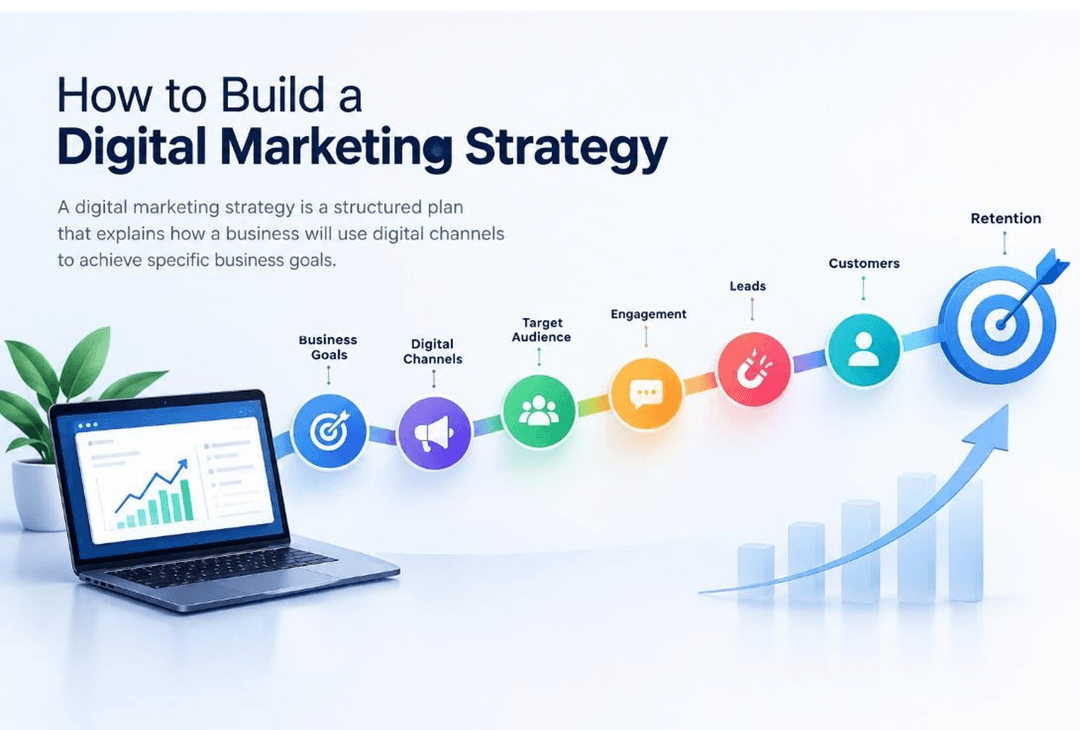
A simple digital marketing journey can look like this:
Business
Digital Channel
Target Audience
Engagement
Lead
Customer
Retention
For example
For example, a software company may publish a blog about business automation. A potential customer searches for information on Google, discovers the blog, visits the company's website, downloads a useful resource, becomes a lead, receives follow-up communication, and eventually becomes a customer. This shows how different digital marketing activities can work together across the customer journey.
Types of Digital Marketing
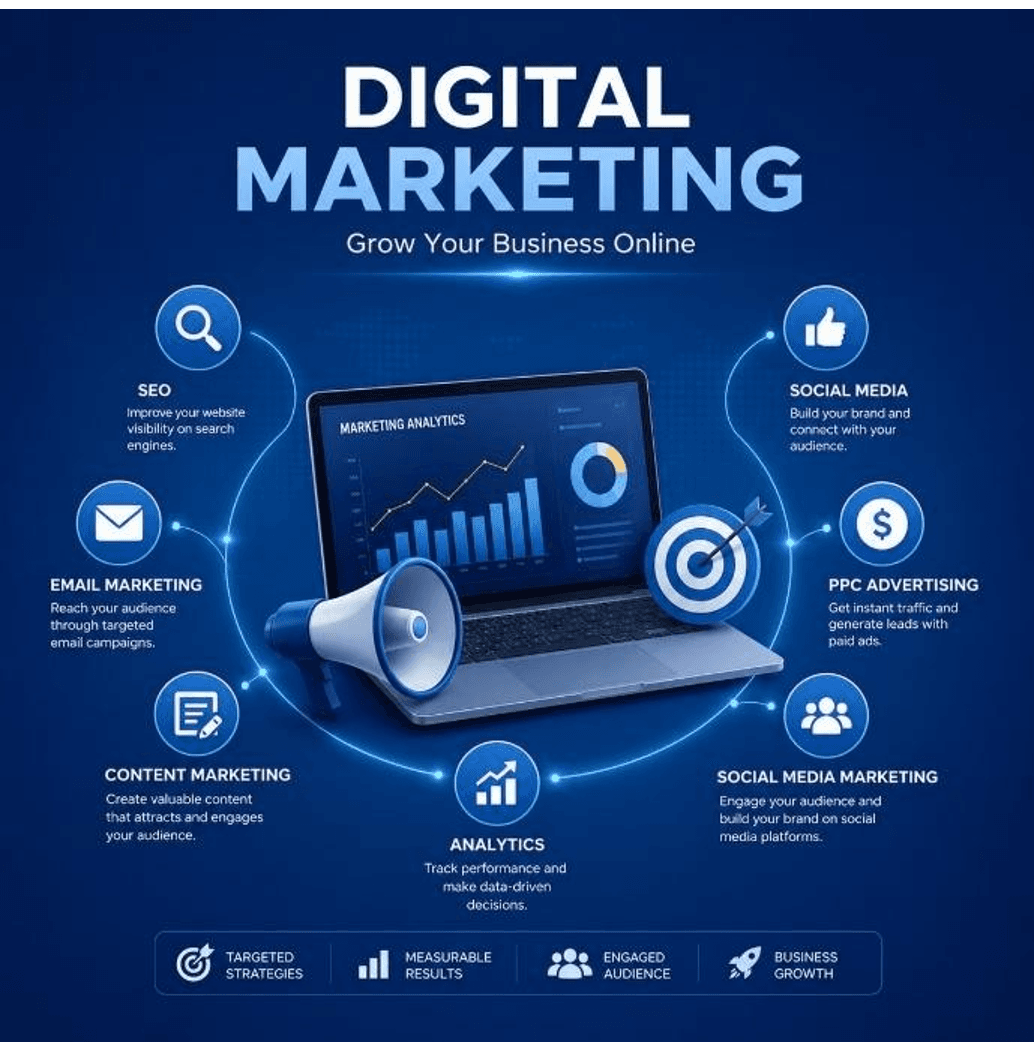
Digital marketing is not a single activity. It consists of several strategies and channels that businesses can use depending on their goals and target audience.
Search Engine Optimization (SEO)
Search Engine Marketing and PPC
Social Media Marketing
Content Marketing
Email Marketing
Video Marketing
Influencer Marketing
Affiliate Marketing
How Does Digital Marketing Work?
Digital marketing works by connecting a business with its target audience through appropriate digital channels. A simple customer journey can be represented as:
Attract
The first goal is to bring potential customers into contact with the business. Businesses can use:
- SEO
- Social media
- Paid advertising
- Blogs
- Videos
- Online communities
Engage
After discovering a business, potential customers need useful information and reasons to continue interacting with it. Engagement can happen through:
- Website content
- Social media posts
- Educational videos
- Guides and resources
Convert
The next step is to turn interested visitors into leads or customers. Conversion methods can include:
- Contact forms
- Demo requests
- Free consultations
- Product purchases
- Newsletter subscriptions
- Lead magnets
Retain
Digital marketing does not end when someone becomes a customer. Businesses can continue building relationships through:
- Email communication
- Educational content
- Customer support
- Personalized communication
- Loyalty campaigns
The goal is to create long-term customer value rather than focusing only on the first transaction.
Why Is Digital Marketing Important?
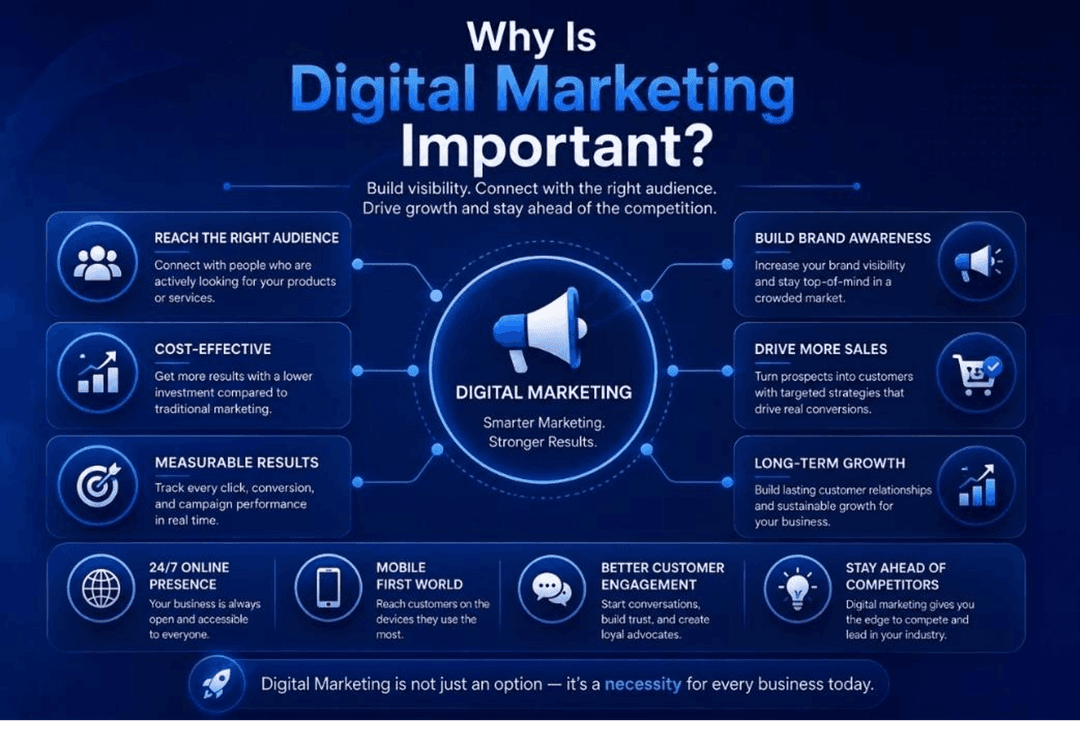
Customer behavior has changed significantly. People increasingly use digital platforms to search for businesses, compare solutions, read reviews, watch demonstrations, communicate with brands, and make purchasing decisions. Digital marketing allows businesses to participate in these customer journeys.
Reach the Right Audience
Digital platforms allow businesses to target specific customer groups rather than communicating with everyone.Build Brand Awareness
Consistent digital activity can help businesses become more recognizable and memorable within their target market.Generate Leads
Businesses can use search, content, social media, advertising, and other channels to attract people who are interested in their products or services.Understand Customer Behavior
Digital platforms provide data about website visits, content engagement, advertising interactions, conversions, and other customer activities.Compete More Effectively
Digital marketing can help smaller businesses reach specific audiences without requiring the same resources as larger organizations.Benefits of Digital Marketing
When planned and executed properly, digital marketing can provide several important benefits.Wider Reach
Businesses can reach customers locally, nationally, or internationally through digital channels.Precise Targeting
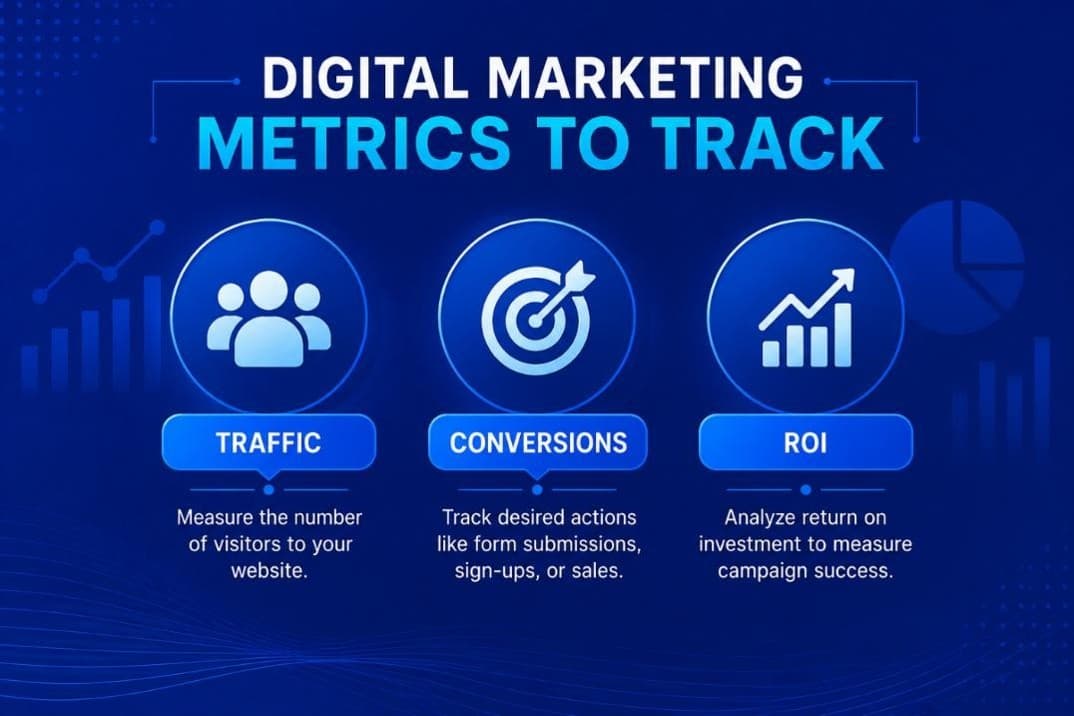
Digital advertising platforms can target audiences using factors such as location, interests, demographics, search behavior, and online activity.Measurable Results
Businesses can monitor metrics such as:
- Website traffic
- Clicks
- Leads
- Conversions
- Cost per lead
- Return on investment
Better Customer Engagement
Digital platforms allow businesses and customers to communicate directly through comments, messages, reviews, email, and other interactions.Personalized Marketing
Businesses can create different messages and experiences based on customer interests, behavior, and position in the buying journey.Long-Term Growth
SEO, content marketing, social media, and other digital activities can continue contributing to visibility and brand growth when managed consistently.
How to Build a Digital Marketing Strategy
A digital marketing strategy is a structured plan that explains how a business will use digital channels to achieve specific business goals. A practical process includes the following steps.
Define Your Business Goals
Start by identifying what you want digital marketing to achieve. Your goals might include:
- Increasing website traffic
- Generating leads
- Increasing sales
- Building brand awareness
- Improving customer retention
Understand Your Target Audience
Identify who your customers are and understand their problems, needs, interests, search behavior, and buying decisions.Ask question such as:
- Who are our ideal customers?
- What problems are they trying to solve?
- What are they searching for online?
- Which platforms do they use?
- What influences their purchasing decisions?
Research Keywords
Keyword research helps businesses understand what potential customers search for online. For example, a business automation company could research keywords related to:
- Business process automation
- Business automation software
- ERP solutions
- CRM software
- Custom software development
Analyze Competitors
Competitor research can help businesses understand the market and identify opportunities. Look at competitors:
- Websites
- Content
- SEO presence
- Social media activity
- Advertising
- Offers
- Positioning
The goal is not to copy competitors but to identify ways to differentiate.
Select the Right Channels
Not every business needs to use every digital channel. The right combination depends on the audience, industry, objectives, budget, and customer journey.
- B2B: SEO + LinkedIn + Content + Email
- E-commerce: SEO + Social Media + Paid Advertising + Email
- Local: Local SEO + Google Ads + Social Media
The right combination depends on the audience, industry, objectives, budget, and customer journey.
Create Valuable Content
Create content that answers customer questions and solves real problems.
- Educational blogs
- How-to guides
- Case studies
- Videos
- Social media posts
- Customer stories
Measure and Optimize
Track relevant KPIs and use the results to improve your campaigns. Digital marketing should be treated as a continuous process of testing, measuring, learning, and improving.
Common Digital Marketing Mistakes
Businesses can waste time and money when digital marketing is executed without a clear strategy. Common mistakes include:
- Targeting everyone instead of a specific audience
- Creating content without understanding search intent
- Focusing only on followers and likes
- Having a slow or difficult-to-use website
- Running advertisements without conversion tracking
- Using every channel without a clear purpose
- Publishing content inconsistently
- Ignoring existing customers
- Failing to analyze campaign performance
The ultimate objective should be business growth, not simply digital activity.
The Future of Digital Marketing
Digital marketing continues to evolve as technology and customer behavior change. Artificial intelligence, automation, personalization, AI-powered search, and first-party data are becoming increasingly important. AI can support activities such as:
Content creation
Customer segmentation
Personalization
Data analysis
Chatbots
Marketing automation
However, technology alone does not create a successful marketing strategy. The future of digital marketing is about using technology intelligently to create better customer experiences, stronger relationships, and smarter business decisions.
Start Your Digital Marketing Journey
So, what is digital marketing?
Digital marketing is much more than posting on social media or running online advertisements. It is a complete approach to connecting businesses with customers through digital channels. From SEO and content marketing to social media, PPC, email, websites, and automation, each channel can play a different role in the customer journey. A successful digital marketing strategy starts with understanding the audience, defining clear business goals, selecting the right channels, creating valuable content, measuring performance, and continuously optimizing results. The real value of digital marketing is not simply being visible online. It is using digital technology strategically to attract the right customers, build trust, generate opportunities, and support sustainable business growth.
Frequently Asked Questions